
Robotic dental implantation – 21st-century dental replacement solution
Introduction
Digital dentistry has transformed nearly every aspect of modern oral care, but one of the most groundbreaking advancements is the emergence of robotic dental implantation. While traditional implant placement relies heavily on the manual skill and experience of the implantologist, robotic systems introduce a new level of precision, consistency, and predictability. By integrating advanced imaging, real‑time navigation, and robotic guidance, this technology represents a major leap forward in implant dentistry. In this article, we explore how robotic dental implantation works, why it is considered a next‑generation solution, and what advantages it offers for both clinicians and patients.
The evolution of precision in implant dentistry Traditional implant placement requires the clinician to manually determine the ideal angle, depth, and position of each implant. Even with digital planning tools, the execution still depends on human accuracy. Robotic dental implantation changes this dynamic by combining static planning with dynamic, real‑time guidance. Using high‑resolution CBCT imaging, the system creates a detailed 3D model of the patient’s bone structure. This allows the robot to calculate the optimal implant trajectory, taking into account bone density, anatomical variations, and prosthetic requirements. The result is a level of precision that exceeds what can be achieved through manual techniques alone.
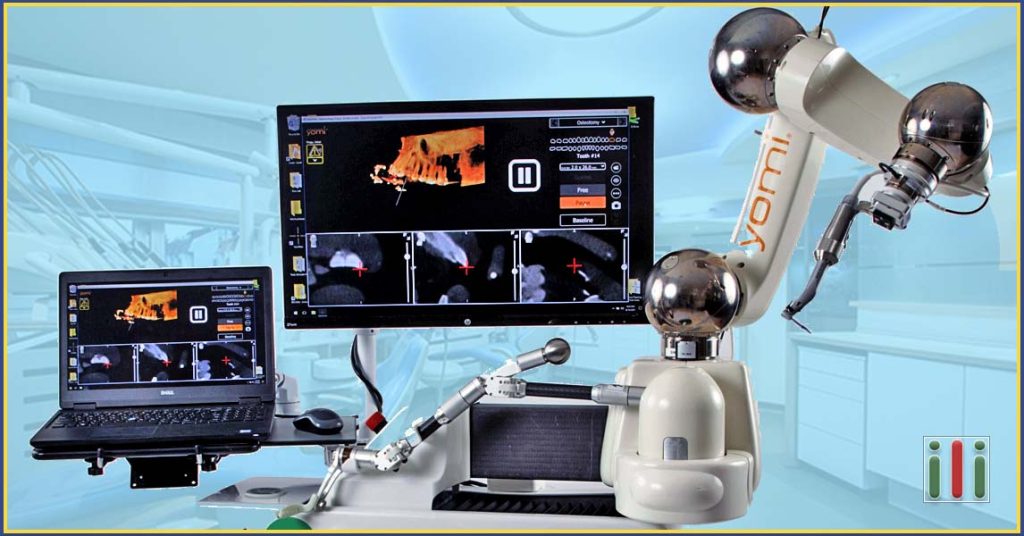
How robotic dental implantation works A robotic implant system typically consists of two coordinated components: a tracking arm and an operative arm. The tracking arm continuously monitors the patient’s position and any subtle movements during surgery. The operative arm, guided by the pre‑planned digital model, assists the implantologist in placing the implant with exceptional accuracy. The robot does not replace the clinician; instead, it acts as a highly advanced tool that enhances control and reduces the risk of deviation. Under the supervision of the implantologist, the system ensures that the implant is placed exactly where it was planned, improving both safety and long‑term success.
Real‑time adaptability during surgery One of the most impressive features of robotic dental implantation is its ability to adapt to unexpected anatomical variations. During surgery, sensors and feedback mechanisms continuously analyze the operative field. If the robot detects a deviation from the planned path—such as a denser bone area or a slight shift in patient positioning—it can adjust in real time. This dynamic responsiveness significantly reduces the likelihood of complications and ensures that the implant is placed in the most stable and biologically favorable position. For patients, this means a safer procedure and a more predictable outcome.
Computer‑guided and remote‑controlled possibilities As robotic systems continue to evolve, the potential for remote‑controlled implant placement is becoming increasingly realistic. In the future, an expert implantologist may be able to perform robotic dental implantation from a distant location, guiding the robot through a secure digital interface. This could be especially valuable in underserved regions, emergency situations, or areas lacking specialized dental professionals. While this technology is still developing, it represents a major step toward expanding access to high‑quality implant care worldwide.
Customized implant design for individual anatomy Another promising aspect of robotic technology is the possibility of creating patient‑specific implants. By analyzing the patient’s bone structure in detail, the system can assist in designing implants that match the unique anatomical characteristics of the jaw. Customized implants may offer improved stability, better load distribution, and enhanced long‑term performance. Although this approach is still emerging, it demonstrates how robotics can push implant dentistry beyond standardized solutions toward fully personalized treatment.
Training and standardization in robotic implantology While robotic systems offer extraordinary precision, their effectiveness depends on proper training and standardized protocols. Implantologists must understand how to interpret digital planning data, operate the robotic interface, and respond to system feedback. When used correctly, robotic dental implantation reduces the variability associated with human skill levels and ensures consistent, high‑quality results. As training programs expand and more clinicians adopt the technology, the overall standard of implant care is expected to rise significantly.
The Yomi robotic system as a real‑world example One of the most widely recognized systems in the field of robotic dental implantation is the Yomi platform developed by Neocis. Yomi is designed to support implantologists during surgery by providing real‑time robotic guidance. The system uses a robotic arm that follows a digitally pre‑planned surgical path with exceptional accuracy. Instead of manually adjusting the drill angle or depth, the clinician works with the robot, which ensures that every movement stays within the safe and optimal trajectory. This collaboration between human expertise and robotic precision significantly reduces the risk of deviation, nerve injury, or sinus perforation. Yomi is already in use in the United States and several other countries, and its growing adoption demonstrates the increasing trust in robotic‑assisted implantology.
Key advantages of robotic‑assisted implant placement Robotic systems offer several benefits that elevate the standard of care in implant dentistry. First, they provide extraordinary precision, ensuring that implants are placed exactly where they were planned. This reduces the likelihood of complications and improves long‑term stability. Second, robotic guidance minimizes human error by standardizing the procedure. Even highly skilled clinicians can experience fatigue or slight variations in technique, but robotic dental implantation maintains consistent accuracy throughout the surgery. Third, the technology enhances patient safety by preventing unintended movements and ensuring that the drill remains within the planned boundaries. These advantages collectively contribute to higher success rates and more predictable outcomes.
Addressing concerns and potential risks Despite the clear benefits, it is important to acknowledge the concerns associated with robotic systems. As with any advanced medical technology, proper training is essential. Implantologists and support staff must understand how to operate the system, interpret feedback, and respond to alerts. Without adequate training, the risk of complications—such as infection, bleeding, nerve damage, or implant failure—may increase. Additionally, robotic systems require regular maintenance and calibration to ensure optimal performance. When these requirements are met, robotic dental implantation becomes a highly reliable and safe method for implant placement.
Long‑term cost‑effectiveness Although the initial investment in robotic technology is substantial, the long‑term financial benefits can be significant. Increased accuracy reduces the likelihood of complications, which in turn decreases the need for corrective surgeries or additional treatments. For patients, this means fewer unexpected costs and a smoother recovery. For dental clinics and surgical centers, fewer complications translate into improved efficiency and better resource allocation. Over time, the combination of higher success rates and reduced revision procedures makes robotic dental implantation a cost‑effective solution despite the higher upfront expense.
Expanding applications in medical and dental fields The advantages of robotic systems extend beyond implant dentistry. The same principles—precision, predictability, and real‑time adaptability—can be applied to various surgical specialties. As robotic technology becomes more advanced and accessible, it is expected to play a larger role in oral surgery, maxillofacial procedures, and even broader medical fields. The integration of robotics into healthcare represents a shift toward safer, more standardized, and more efficient surgical care. For patients, this means improved outcomes and a more comfortable treatment experience.
The future of robotic dental implantation As digital dentistry continues to evolve, robotic systems are expected to become even more sophisticated. Future developments may include fully automated implant placement, enhanced remote‑controlled capabilities, and deeper integration with AI‑driven diagnostic tools. These advancements could make robotic dental implantation more accessible worldwide, especially in regions where specialized implantologists are scarce. The combination of robotics, artificial intelligence, and personalized implant design has the potential to redefine the standard of care in implant dentistry.
Summary Robotic dental implantation represents one of the most significant technological advancements in modern implant dentistry. By combining detailed digital planning, real‑time navigation, and robotic precision, this method enhances safety, accuracy, and predictability. Although the technology requires proper training and carries higher initial costs, the long‑term benefits—fewer complications, improved outcomes, and greater patient satisfaction—make it a promising solution for the future. As robotic systems continue to evolve, they are expected to become more accessible and widely adopted, shaping a new era in dental implant procedures where precision and safety are the defining standards.
In our Articles section, there are many writings on the following topics: dentures with implants, dental implantation with one-phase and two-phase implants, and All-On-4 & All-On-6 technology.
We work with state-of-the-art dental tools, materials, and technologies.
30 years of experience, more than 35,000 successful implant placements, and a 99.7% success rate!
iliDent Patient Coordinator © Copyright 2023
ImmediateLoadingImplants.com


