
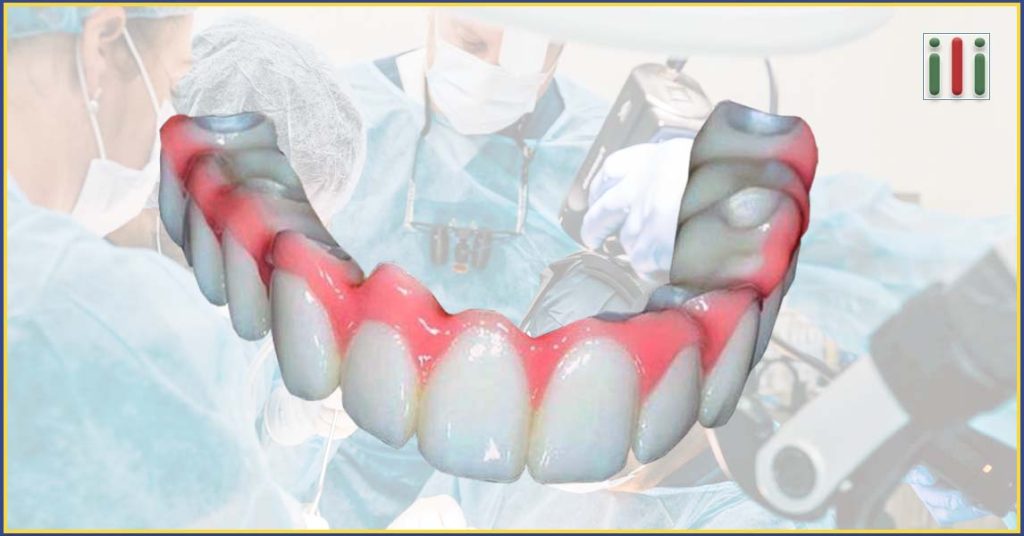
Oral rehabilitation with a one-phase implant under general anesthesia
Introduction
Healthy, well-maintained teeth are essential not only for appearance but also for overall health. A neglected, toothless oral cavity can lead to serious medical problems, affecting nutrition, digestion, and systemic well-being. When teeth are no longer suitable for dental treatment, they must be removed and replaced as soon as possible. While several tooth replacement options exist, our specialty is one-phase implant-based oral rehabilitation, a modern method that restores full oral function quickly and predictably. This article explains what one-phase implants are, how the oral rehabilitation process works, and why general anesthesia plays a central role. As the source document states: “The one-phase implant is implantable in a single phase. Consequently, the implantation of an implant is a single intervention.” This efficiency is one of the many reasons patients choose this method.
What is a one-phase implant?
A one-phase implant is a high-purity titanium alloy screw designed to replace the natural tooth root. It is an immediate loading implant, meaning it can support a long-term temporary fogsor within days of placement. Its main characteristics include:
— Implantable in a single phase,
— Loadable immediately after placement,
— Made from a single piece,
— Implantable in both tooth bone and jawbone,
— Insertable perpendicularly or at various angles,
— Often eliminates the need for bone replacement.
These features make one-phase implants especially suitable for patients with bone deficiency, as they allow placement in deeper, denser bone regions where traditional two-phase implants cannot be used.
What is oral rehabilitation?
Oral rehabilitation refers to restoring full oral function when all teeth are missing or when existing teeth are unsuitable for further treatment. It may involve the upper jaw, the lower jaw, or both—known as full-mouth rehabilitation. In many cases, some teeth may appear healthy but are not worth saving because treatment would only provide a temporary solution. Long-term reliability is essential; therefore, oral rehabilitation is recommended when preserving teeth is no longer practical or beneficial.
What oral rehabilitation solutions exist?
There are two main approaches:
— Traditional dentures, which rest on the gums and are removable,
— Implant-based dentures, which are fixed and supported by implants.
Traditional dentures often cause problems such as instability, poor chewing force, gum irritation, and discomfort. In contrast, implant-based solutions—especially one-phase implant-based oral rehabilitation—provide superior stability, function, and long-term comfort. While two-phase implants are also widely used, they require specific bone conditions and multiple surgical stages. In this article, they are mentioned only for comparison.
How to start if you are interested in one-phase implant-based oral rehabilitation
The first step is requesting an appointment. Patients can contact the clinic in several ways:
— Online appointment request via the CONTACT page,
— Uploading an X-ray or other documents,
— Leaving a short message,
— Calling the clinic directly,
— Using apps such as Facebook, Viber, Messenger, or WhatsApp.
Online booking is available 24/7 and is the most convenient option. High-end clinics respond within a few working days and schedule a consultation if the proposed time is acceptable. The consultation is free, but attending it is the patient’s responsibility.
Personal consultation
A personal consultation is essential for accurate diagnosis and treatment planning. It allows the patient to meet the implantologist, ask questions, and build trust—an important factor in successful treatment. The consultation includes:
— CT and panoramic X-ray imaging,
— A thorough oral cavity examination,
— Evaluation of general health and medical history,
Discussion of medications and allergies,
— Assessment of bone condition and implant feasibility.
Imaging is crucial because panoramic X-rays provide a two-dimensional view, while CBCT offers a precise three-dimensional digital model of the jawbone. Successful implantation is impossible without these diagnostic tools.
After gathering all necessary information, the implantologist prepares a treatment plan and a quote valid for three months. The patient also receives information about general anesthesia and the required preliminary tests, such as laboratory work and ECG.
How one-phase implant placement occurs
Consultation with the anesthesiologist, general anesthesia (If anesthesia requested)
If the test results are satisfactory and the patient signs the consent form, the anesthesiologist conducts a pre-anesthesia consultation. They review medical history, explain the anesthesia process, and confirm suitability. If everything is in order, general anesthesia begins, followed by the surgical procedure.
Removal of teeth unsuitable for dental treatment
Most patients undergoing oral rehabilitation have teeth that cannot be restored. These must be removed before implantation. Tooth extraction is usually straightforward, although retained roots or impacted teeth may require more attention.
Implantation
The core of the procedure is the placement of one-phase implants in the upper jaw, lower jaw, or both. Typically, 8–10 implants are inserted per jaw. The implants pass through the gums into the tooth bone or, when necessary, into the jawbone.
Two major advantages of one-phase implants are:
— They can be implanted in the jawbone when tooth bone is insufficient,
— The long-term temporary denture is fixed directly to the implants, not the gums.
After implantation, a panoramic X-ray is taken to verify correct positioning. Sutures are removed 5–7 days later.
Long-term temporary dentures
The first phase of oral rehabilitation concludes with the preparation and delivery of long-term temporary dentures. The patient returns the day after implantation for a control examination. Additional follow-ups may occur until suture removal. After 6–8 days, impressions are taken for the temporary fogsor, which the dental technician prepares.
Permanent dentures
The second phase occurs 5–6 months after implantation, once healing and ossification are complete. As the document states: “The second part of one-phase implant-based oral rehabilitation is the preparation of the permanent denture(s).” The permanent denture is not included in the initial implantation package price.
The process includes:
— Panoramic X-ray and oral examination,
— Removal of the temporary fogsor,
— Impression taking,
— Framework testing,
— Final porcelain fogsor fabrication and fixation.
The permanent fogsor is fixed and not removable by the patient.
Why general anesthesia is recommended
While many dental treatments can be performed under local anesthesia, full-mouth rehabilitation requires general anesthesia for two reasons:
— The entire oral cavity is treated, making local anesthesia insufficient,
— The procedure is long, often lasting up to four hours or more.
General anesthesia ensures complete comfort and optimal working conditions for the surgeon. The cost of anesthesia is included in the package price.
What does the package price include?
First visit
— Personal consultation,
— CT and panoramic X-rays,
— Full oral examination,
— General anesthesia, (if the patient requests)
— Removal of unsuitable teeth,
— Preparation and placement of one-phase implants,
— Sampling for long-term temporary fogsor, — Creation and fixation of temporary fogsor, — Control examinations.
Second visit
— Consultation,
— Panoramic X-ray,
— Oral examination,
— Sampling for permanent fogsor,
— Fabrication and fixation of permanent porcelain fogsor,
— Control tests and instructions.
Summary
Modern one-phase implant-based oral rehabilitation offers a fast, predictable, and comfortable solution for patients requiring full-mouth restoration. The method’s advantages—single-phase implantation, immediate loadability, suitability for bone deficiency, and reduced need for bone replacement—make it one of the most advanced tooth replacement options available. General anesthesia ensures complete comfort during the long and complex procedure. Soft-tissue healing occurs within weeks, ossification stabilizes in 3–5 months, and the final fogsor provides long-term function and aesthetics. With 30 YEARS of experience, more than 35,000 implants placed, and a 99.7% success rate, this treatment offers exceptional reliability and life-changing results.
In our Articles section, there are many writings on the following topics: dentures with implants, dental implantation with one-phase and two-phase implants, and All-On-4 & All-On-6 technology.
We work with state-of-the-art dental tools, materials, and technologies.
30 years of experience, more than 35,000 successful implant placements, and a 99.7% success rate!
iliDent Patient Coordinator © Copyright 2023
ImmediateLoadingImplants.com


