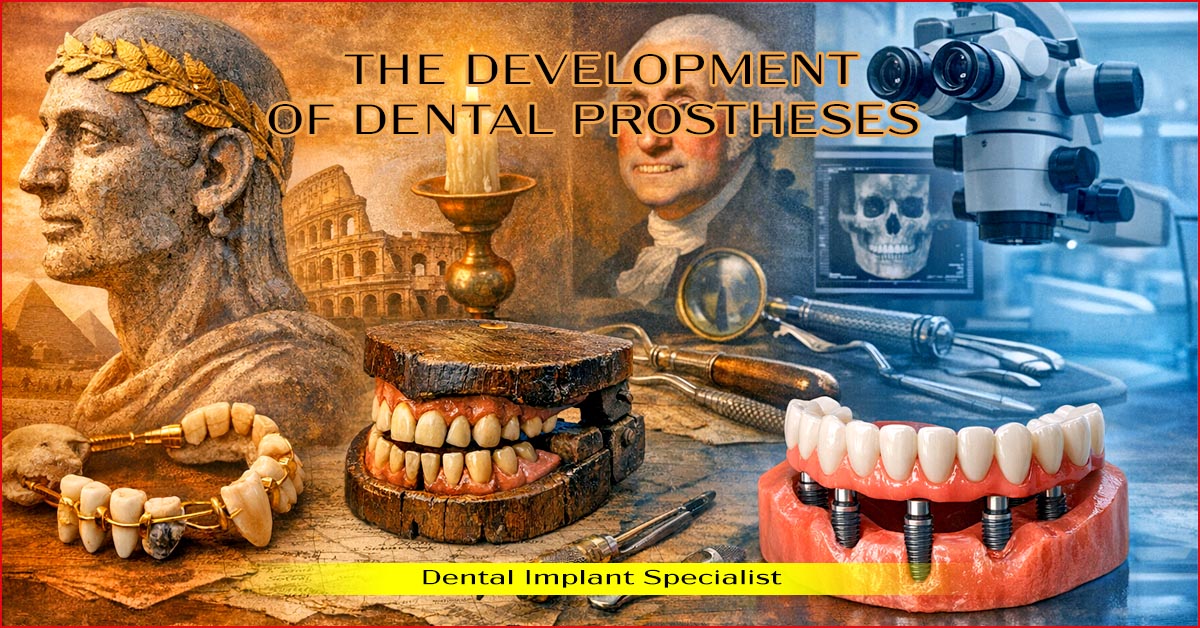
THE DEVELOPMENT OF DENTAL PROSTHESES FROM THE ETRUSCANS TO THE MODERN ALL ON 4 SOLUTION
The development of dental prostheses from the Etruscans to the modern All on 4 solution – Dentistry has existed for over 2000 years Introduction The

30 + YEARS OF EXPERIENCE – 35,000 + IMPLANTATIONS – 99.7% SUCCESS RATE!
The introduction of dental implants has revolutionized the practice of tooth replacement. In the past, available options were limited and often less effective. Today, implant placement has opened entirely new possibilities.
Although the cost may be higher, more and more patients are choosing this solution — especially when multiple teeth need to be replaced or full-mouth rehabilitation is required. Dental implants make it possible to preserve existing healthy teeth while receiving crowns, bridges, or even a complete fixed denture — often within just one week.
A fogászati implantátum egy nagy tisztaságú titán ötvözetből készült csavar, amelyet a fogcsontba ültetnek be, és amely a természetes foggyökeret helyettesíti. Erre biztonságosan rögzíthető korona, híd vagy teljes fogsor. Két fő típusa terjedt el:
— Hagyományos, kétfázisú implantátum – hagyományos, több lépcsős beültetés.
— Azonnal terhelhető, egyfázisú implantátum – azonnal terhelhető, gyorsabb megoldás.
— All-on-4, Technológia – mindössze négy stratégiailag elhelyezett és beültetett implantátumot igényel.
— All-on-6 Technológia – Az előzőhöz hasonló megoldás, de ez esetben a felső állcsontba hat implantátumot ültetnek be.
Mind a négy típus megbízható, de eltérő kezelési protokollt igényel.
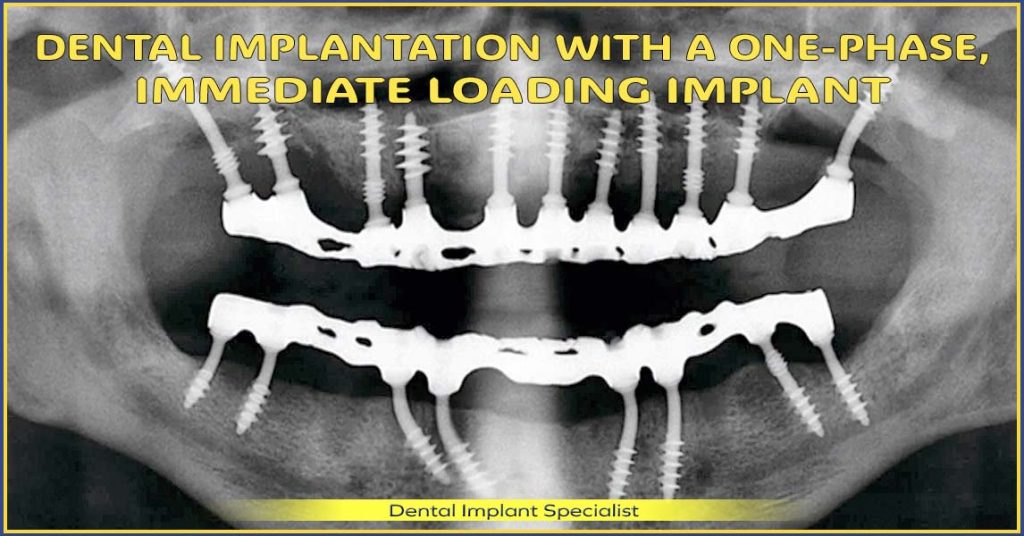
The other complete denture fixation on the implant is with one-phase, immediate loading implants. That is also an implantation method that has been in existence for quite a few decades and has started to become popular in the last few years. This solution is significantly different from traditional biphasic in many respects. On the one hand, the name implies a single phase, and on the other hand, the implanted implants consist of a single piece and can be varied. There is only one obstacle to faster spread: its price is quite expensive.
Even more important is the ability to single-phase implants to be immediately loaded! There is no need for a 3-6 month ossification period for biphasic patients, and implants are loadable immediately after implantation. Thanks to this feature, a complete oral rehabilitation, complete lower and upper denture, can be done in 3-5 days. You can read more about it here.
Dental implantation is the commonly used term for placing a dental implant. The process involves inserting the implant into the bone — either the alveolar bone or the jawbone — to serve as a replacement for the natural tooth root.
One of the key advantages of the one‑phase implant is that it can be used even in cases of bone deficiency, making it a solution that is accessible to a wider range of patients.
Missing teeth are not only an aesthetic concern — they can also lead to significant oral‑health complications over time. When a tooth is lost, several changes begin to occur: — The neighboring teeth start to shift and tilt out of alignment. — The jawbone gradually deteriorates, and the gum tissue recedes. — The risk of tooth decay and gum disease increases.
Dental implant placement helps prevent these processes and supports long‑term oral health by stabilizing the bite, preserving bone structure, and maintaining proper function.
Why addressing tooth loss promptly matters
Untreated tooth loss affects far more than appearance. It can alter chewing efficiency, impact facial structure, and contribute to ongoing dental problems. Implant‑based restoration offers a stable, durable solution that protects both function and health.
Implant‑based tooth replacement looks, feels, and functions almost exactly like natural teeth. Its advantages go far beyond aesthetics and comfort, offering long‑term support for oral health and everyday function.
Key benefits include:
— Natural biting and chewing strength that restores full functionality.
— Simple daily care, similar to maintaining natural teeth.
— Reduced risk of tooth decay and gum disease by stabilizing the surrounding structures.
— Prevention of bone loss and gum recession by stimulating the jawbone.
— A long‑lasting solution that can serve patients reliably for many years.
The duration of an implant procedure depends primarily on how many implants are being placed and which rehabilitation method is used. Different treatment types require different timelines:
— Replacing one or two teeth: a short, temporary period without teeth, followed by the final restoration.
— Full‑mouth rehabilitation: a 2–5 hour surgical procedure, with the durable temporary restoration delivered approximately one week later.
— All‑on‑4 technology: a one‑ to two‑hour surgery, with the final full‑arch restoration completed on Day 20.
— All‑on‑6 technology: similarly, a one‑ to two‑hour surgery, with the final full‑arch restoration ready on Day 20.
Implant‑supported restorations provide exceptional stability and comfort, eliminating the common inconveniences associated with traditional removable dentures.
The cost of implant‑based tooth replacement depends on several key factors, including the clinic’s location, the overall quality of care, and the type of implant system used. Prices at clinics in Budapest are often higher than those in smaller cities, but quality should always remain the top priority. It is generally advisable to choose a clinic that offers transparent package pricing, as this provides a clearer overview of the total cost and eliminates unexpected additional fees.
PRICE LIST 2026 (Package Prices)
| Treatment Name | HUF | EUR | USD |
|---|---|---|---|
| Full denture, one‑phase implant – maxilla | 1,360,000 | 5,440 € | $6,430.00 |
| Final denture – maxilla | 1,372,000 | 4,620 € | $5,460.00 |
| Full denture, one‑phase implant – mandible | 1,360,000 | 5,440 € | $6,430.00 |
| Final denture – mandible | 1,372,000 | 4,620 € | $5,460.00 |
| Full denture, one‑phase implant – maxilla/mandible | 2,720,000 | 10,880 € | $12,860.00 |
| Final denture – maxilla/mandible | 2,744,000 | 9,240 € | $10,920.00 |
| All‑on‑4 technology, final denture – maxilla | 1,080,000 | 3,940 € | $4,660.00 |
| All‑on‑4 technology, final denture – mandible | 1,176,000 | 3,960 € | $3,960.00 |
| All‑on‑6 technology, final denture – maxilla | 1,620,000 | 5,940 € | $7,020.00 |
| All‑on‑6 technology, final denture – mandible | 1,176,000 | 3,960 € | $3,960.00 |
| Anesthesia – first hour | 185,000 | 480 € | $550.00 |
| Anesthesia – each additional hour | 90,000 | 235 € | $270.00 |
Titanium dental implants are extremely durable — in fact, they are designed to last a lifetime. However, their longevity depends on the condition of the surrounding bone tissue. In older age, osteoporosis may occur, which can compromise implant stability.
For this reason, dental implantation is typically offered with a 10‑year guarantee. The good news is that changes in bone quality can often be managed — for example, by placing a thicker implant to ensure stability.

The development of dental prostheses from the Etruscans to the modern All on 4 solution – Dentistry has existed for over 2000 years Introduction The

Implant placement aftercare, important information Introduction Among modern tooth replacement procedures, dental implant placement represents the highest technological standard; however, concluding the surgical phase is

Pain‑free and stress‑free dental implant procedure with sedation Introduction Patients searching for a safe, pain‑free way to replace missing teeth often discover that the dental